




Megaport Storage Marks the Next Step Toward Automated Infrastructure at Scale
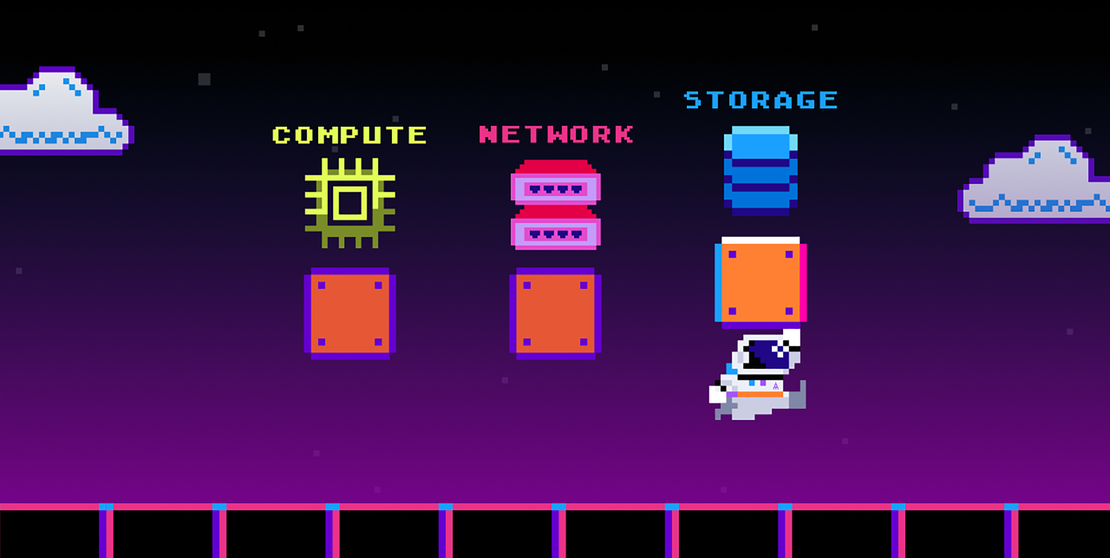
Built as a globally distributed storage platform integrated directly into the Megaport backbone and co-located with Latitude.sh compute infrastructure, Megaport Storage simplifies how organizations store, move, and access data across distributed environments with a unified infrastructure experience spanning compute, network, and storage.
For years, enterprise infrastructure has moved toward abstraction.
Compute became elastic. Networks became software-defined. Storage became distributed across clouds, regions, and providers. Every layer evolved independently, becoming faster, more programmable, and more scalable.
But as infrastructure became more modular, complexity moved into the spaces between systems. Applications now span multiple clouds. Data moves constantly between environments. Backup and recovery workflows span regions, providers, and platforms. AI workloads depend on moving enormous datasets quickly and reliably between storage and compute.
The challenge is no longer simply infrastructure availability. It’s coordination – and increasingly, the bottleneck is the movement of data itself.
Megaport Storage is designed for that next phase.
Introducing Megaport Storage
Megaport Storage represents an expansion of the Megaport platform beyond connectivity alone.
Built as a globally distributed storage platform integrated directly into the Megaport backbone and co-located with Latitude.sh compute infrastructure, Megaport Storage simplifies how organizations store, move, and access data across distributed environments with a unified infrastructure experience spanning compute, network, and storage.
At launch, Megaport Storage focuses primarily on object storage optimized for backup, recovery, and data-intensive workloads, with high-performance object, block, and file storage to follow shortly.
Customers can provision storage on demand, connect it privately through the Megaport fabric, and avoid much of the operational and commercial friction commonly associated with moving large volumes of data between environments.
This changes the economics of large-scale backup and recovery workflows, particularly for organizations moving significant amounts of data between cloud, edge, and on-premises infrastructure.
The hidden cost of distributed infrastructure
Modern infrastructure was built around flexibility – but flexibility often comes with operational friction.
Data sits in one environment while applications run in another. Backup repositories live behind unpredictable retrieval costs. Infrastructure teams stitch together separate services for networking, storage, compute, security, and recovery – each with its own pricing model, operational workflow, and performance constraints.
The result is an infrastructure model that scales technically, but not always operationally.
No longer just a destination, storage is increasingly where that friction surfaces. Recovery Point Objectives are constrained by how quickly data can move. Egress fees make large-scale recovery operations expensive at precisely the moment resilience matters most. AI and analytics workloads can spend as much time waiting on data movement as they do processing.
In these environments, the network becomes inseparable from storage. But the closer storage sits to the network fabric, and to compute itself, the more those constraints begin to disappear. This is exactly where Megaport Storage adds value.
Available now: Standard Object Storage
Megaport Standard Object Storage is designed for organizations prioritizing scalable, predictable storage for backup repositories, archive environments, disaster recovery targets, and long-term data retention.
- S3-compatible: Work with the enterprise backup tools you already use; no re-architecting required.
- No egress fees: Access your data over a no-cost direct connection with zero egress charges – what you store is all you pay for.
- Object lock: Immutable storage means once written, your data can’t be modified or erased until the retention period expires – protecting your backups from ransomware and accidental deletion.
- High-throughput access: Direct-connected storage includes throughput up to 100 Gbps.
- No capacity limits: Scale your storage to whatever your workloads demand, with flat per-TB pricing and no minimum commitments.
You’ll get operational simplicity, predictable pricing, and large-scale storage without hidden retrieval or egress costs.
Use it for:
- enterprise backup and disaster recovery using tools you already run, such as Veeam
- ransomware-resilient backup repositories with object lock enabled
- long-term archive and compliance data retention at any scale.
Explore Megaport Standard Object Storage
Coming soon
The rise of infrastructure platforms
Over more than a decade, Megaport has established itself as a global Network-as-a-Service platform. With the recent expansion into compute through Latitude.sh, and now the launch of Megaport Storage, the platform has evolved into something broader: a global automated infrastructure platform designed around the movement, access, and control of data.
This evolution reflects a shift happening across the wider industry. Organizations are moving away from assembling isolated products for networking, storage, compute, and security, and toward integrated platforms that reduce friction between those layers.
This evolution is driven by converging forces like:
- AI and analytics workloads requiring faster data access
- distributed cloud architectures
- rising pressure around cyber resilience and disaster recovery
- growing frustration with unpredictable infrastructure pricing
- the operational overhead of managing fragmented infrastructure stacks.
The next phase of software-defined infrastructure
Infrastructure is entering a new phase where connectivity alone is no longer enough.
Organizations increasingly expect infrastructure platforms to unify networking, storage, compute, and security into a more cohesive operational model – one that simplifies deployment, improves scalability, and reduces friction between systems.
Megaport Storage is designed for that shift.
This launch marks another step in the company’s broader vision for automated infrastructure at scale, bringing compute, network, and storage together into a more connected software-defined platform.