





Is It Time to Rethink Your Multicloud Strategy?
- Cloud networking
- July 14, 2026
- RSS Feed
By German Santillan, Solutions Architect
The original case for multicloud still holds — but the conditions around it have shifted significantly. Here's what you should be asking before your next cloud decision.
Most organizations didn’t set out to have a multicloud strategy. They just accumulated one – a mix of providers, tools, and integrations built up over time as individual workload decisions compounded into something that now requires a strategy of its own.
But if your multicloud architecture was designed more than a few years ago, it was probably designed for a different set of conditions. Four forces have reshaped cloud networking since then. If your strategy hasn’t evolved in that time, it may be optimized for a landscape that no longer exists.
The four forces reshaping multicloud

1. The AI factor
AI workloads don’t behave like traditional enterprise workloads. GPU availability, latency sensitivity, and the sheer unpredictability of AI infrastructure decisions are pulling organizations toward cloud choices they wouldn’t have made two years ago. If your multicloud setup predates AI, it wasn’t designed with this variable in mind — and that gap tends to show up in performance, cost, and agility.

2. Cloud repatriation
The “cloud-first” reflex of the past five years has softened. For workloads where the economics don’t justify hyperscaler pricing, bare metal or on-premises deployments are back on the table. This isn’t a rejection of cloud, but more an honest account of where the cloud actually adds value and where it doesn’t. The side effect, though, is added complexity. Every workload that moves back on-prem is another integration to manage and another edge in your environment.

3. Regional distribution
Early multicloud designs weren’t always built with data sovereignty in mind. Now, they are. Regulatory requirements, latency expectations, and resilience standards now demand geographic precision that a global-but-generic cloud footprint can’t provide. Today, regional coverage needs to be designed around compliance rather than convenience.
4. Managing complexity
Management overhead scales with organizations as they add more providers, edges, and integrations. At some point, complexity becomes the risk. Organizations that once saw multicloud as a victory against vendor lock-in are now managing an environment so intricate that it creates its own form of lock-in with the complex management required.
What this means for your multicloud strategy
The original goals of multicloud (resilience, vendor independence, best-of-breed capabilities) haven’t become less valid. What has changed is how you achieve these goals. Connectivity and control, once treated as implementation details, are now central to making multicloud work. Without them, flexibility is theoretical.
How to review your multicloud strategy
Treat this as a set of questions worth asking, rather than a prescriptive process.
Where does AI fit in my architecture?
Are the cloud choices you’ve made enabling your AI ambitions, or creating friction around them? If you’re retrofitting AI workloads into an environment that wasn’t designed for them, that’s worth addressing directly.
Am I optimizing or just deferring?
Repatriation isn’t always the right answer, but it’s worth considering on its merits. If certain workloads cost more in the cloud than they would elsewhere, the migration could be well worth the ROI.
Is my regional footprint still fit for purpose?
Data gravity and compliance requirements evolve. The footprint that served you two years ago may not serve you today, particularly if your customer base or regulatory environment has shifted.
Is my connectivity keeping pace?
This tends to be the question organizations answer last, when it should be one of the first. The connectivity that binds your environment together doesn’t look anything like it did five years ago; if it has been that long since you reviewed your connections, it’s time to.
Why private connectivity matters
The four forces reshaping multicloud share a common thread: they all demand infrastructure that can move quickly, flexibly, and reliably. That’s fundamentally a connectivity challenge. Private, low-latency connectivity between clouds, on-premises environments, and the edges of your network is what makes everything else function.
Predictable performance, the ability to shift workloads without rebuilding integrations, resilience at the network layer, real flexibility and control: all of it depends on getting connectivity right.
How Megaport reimagines multicloud
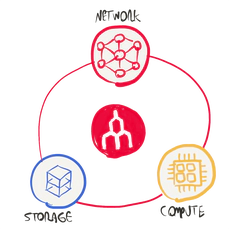
Megaport brings compute, network, and storage together under one platform, with on-demand provisioning and global reach across clouds and data centers. Whether you’re adding a cloud connection, extending to a new region, or rethinking how your entire infrastructure fits together, the ability to move without a construction project behind every change is what keeps your multicloud strategy responsive rather than reactive.