





How to Optimize Cloudflare Connectivity for Performance, Cost, and Control
- Integrations
- July 21, 2026
- RSS Feed
By Aurelian Bonciog, Solutions Architect, DACH
Learn why adding a dedicated network edge between Cloudflare and your cloud can deliver faster, more predictable, cost-efficient traffic.
There was a time when every user first connected to the corporate network before accessing business applications. The network perimeter was well defined, and IT controlled it; security was centralized behind firewalls, VPN concentrators, and proxy servers.
Today, that perimeter no longer exists. Users now connect directly from anywhere—home, airports, hotels, or customer sites—to applications running in private and public clouds. The network has become distributed, and security has had to evolve alongside it.
This is exactly the problem Security Service Edge (SSE) platforms like Cloudflare were built to solve.
How Cloudflare connectivity works
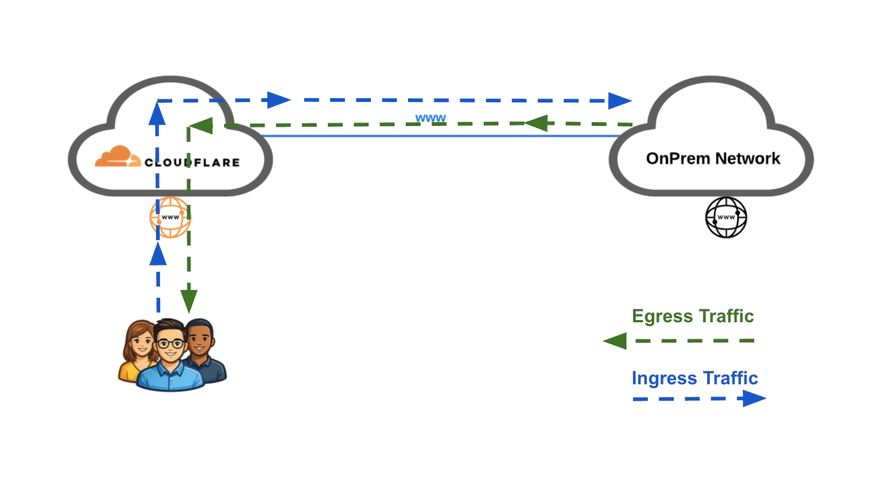
Cloudflare connectivity routes user traffic through Cloudflare’s global edge, where identities are authenticated, security policies are enforced, and traffic is inspected before being securely forwarded to your applications.
Instead of forcing traffic through a central corporate network, Cloudflare delivers security wherever your users are. By authenticating identities, inspects traffic, enforces security policies, it becomes the secure front door to your applications.
It’s a great architecture.
Cloudflare solves the challenge of distributed security by bringing protections closer to the user while keeping applications protected behind its global edge.
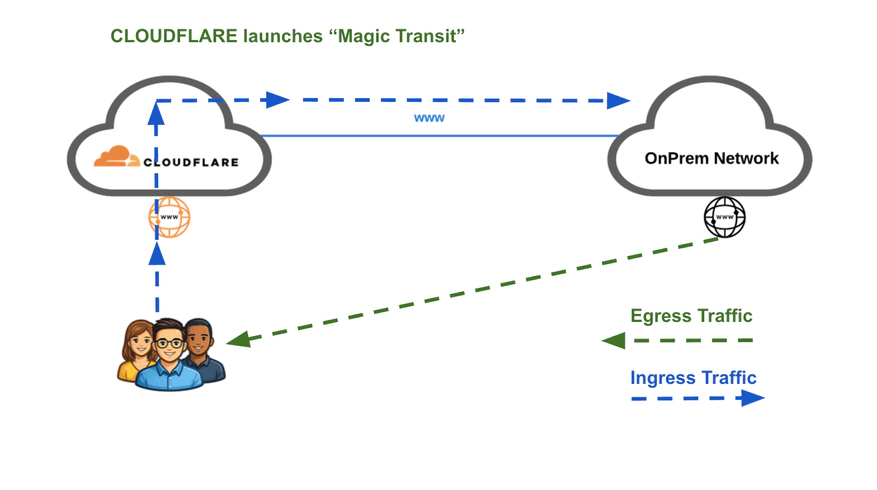
In a traditional data center, implementing this design is relatively straightforward. You own the routers, control the routing, and ultimately decide how traffic enters and leaves your network. Using BGP (or even static routes), your inbound traffic stays protected by Cloudflare while steering outbound traffic over the path that best meets your performance and cost requirements.
Everything changes once your workloads move into the public cloud.
Using Cloudflare connectivity in a public cloud architecture
When your workloads move to the public cloud you no longer control the underlying network, your routing options become limited, and every outbound gigabyte is metered. Suddenly, architecture decisions directly affect your monthly cloud bill.
In this setup, you’ll want to use Cloudflare connectivity to do more than just secure your users. You’ll also want to keep Cloudflare as the secure front door while optimizing the return path to improve performance and reduce cloud egress costs.
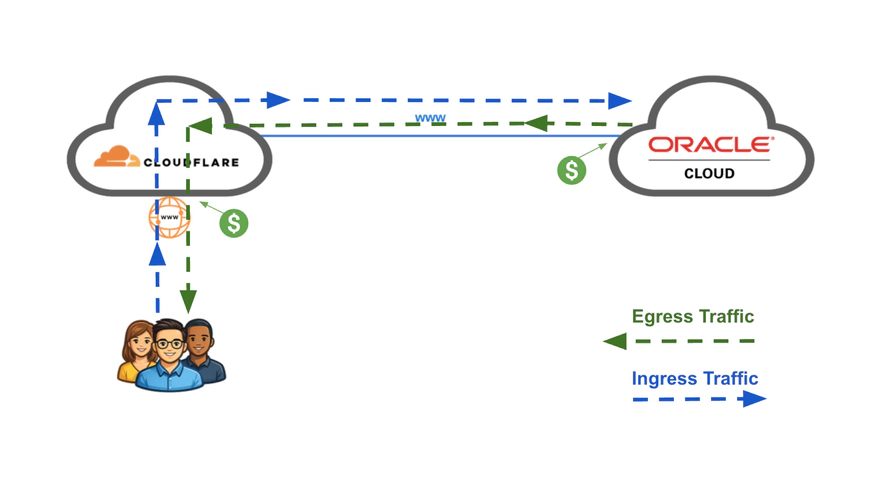
This is where Megaport changes the architecture.
Instead of relying entirely on cloud-native internet connectivity, you can introduce a dedicated network edge between your cloud workloads and Cloudflare.
By deploying a Megaport Virtual Edge (MVE) or integrating your existing SD-WAN, you can establish private connectivity to your cloud while using Megaport Internet as the optimized outbound path.
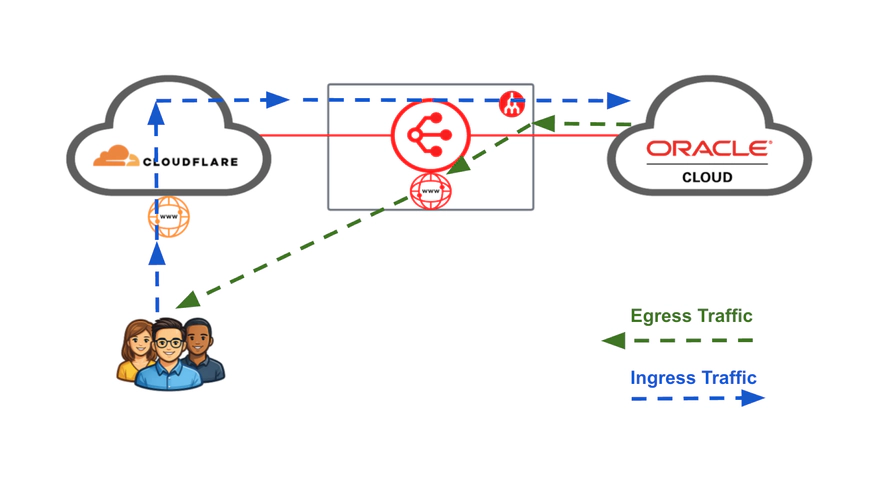
This architecture generally provides better performance and lower networking costs, but the biggest benefit is actually control. By introducing an independent network edge, you regain control over how traffic enters and leaves your cloud environment. Instead of relying solely on the cloud provider’s default routing, you can design the forwarding path that best meets your performance, resilience, and cost objectives.
As network engineers, we know that power is nothing without control. With the right architecture, you decide how traffic flows; you’re no longer limited by the default networking behavior of your cloud provider.
With Megaport for your Cloudflare connectivity, you’re back in control.